



DNA/RNA Synthesis
RNA synthesis, which is also called DNA transcription, is a highly selective process. Transcription by RNA polymerase II extends beyond RNA synthesis, towards a more active role in mRNA maturation, surveillance and export to the cytoplasm.
Single-strand breaks are repaired by DNA ligase using the complementary strand of the double helix as a template, with DNA ligase creating the final phosphodiester bond to fully repair the DNA.DNA ligases discriminate against substrates containing RNA strands or mismatched base pairs at positions near the ends of the nickedDNA. Bleomycin (BLM) exerts its genotoxicity by generating free radicals, whichattack C-4′ in the deoxyribose backbone of DNA, leading to opening of the ribose ring and strand breakage; it is an S-independentradiomimetic agent that causes double-strand breaks in DNA.
First strand cDNA is synthesized using random hexamer primers and M-MuLV Reverse Transcriptase (RNase H). Second strand cDNA synthesis is subsequently performed using DNA Polymerase I and RNase H. The remaining overhangs are converted into blunt ends using exonuclease/polymerase activity. After adenylation of the 3′ ends of DNA fragments, NEBNext Adaptor with hairpin loop structure is ligated to prepare the samples for hybridization. Cell cycle and DNA replication are the top two pathways regulated by BET bromodomain inhibition. Cycloheximide blocks the translation of mRNA to protein.
DNA/RNA Synthesis Isoform Specific Products
All Product Categories
-
DNA/RNA Synthesis Inhibitors
(1441)
View all products
-
DNA/RNA Synthesis Agonists
(10)
View all products
-
DNA/RNA Synthesis Antagonists
(2)
View all products
-
DNA/RNA Synthesis Activators
(42)
View all products
-
DNA/RNA Synthesis Modulators
(33)
View all products
-
DNA/RNA Synthesis Chemicals
(20)
View all products
-
DNA/RNA Synthesis Inducers
(15)
View all products
-
DNA/RNA Synthesis Degraders
(3)
View all products
-
DNA/RNA Synthesis Controls
(5)
View all products
-
DNA/RNA Synthesis Substrates
(6)
View all products
-
DNA/RNA Synthesis Ligands
(5)
View all products
-
DNA/RNA Synthesis Related Products (2828)
Related Products (2828)

-
Antibodies (248)
-
DNA/RNA Synthesis Isoform Comparison
-
BWC0977 formic
 0 ImagesBWC0977 formic is an antibacterial agent that inhibits bacterial DNA replication via inhibition of DNA gyrase and topoisomerase IV. BWC0977 formic exhibits a minimum inhibitory concentration (MIC90) of 0.03-2 µg/mL against MDR (Multi-Drug Resistant) Gram-negative bacteria.
-
Datelliptium chloride
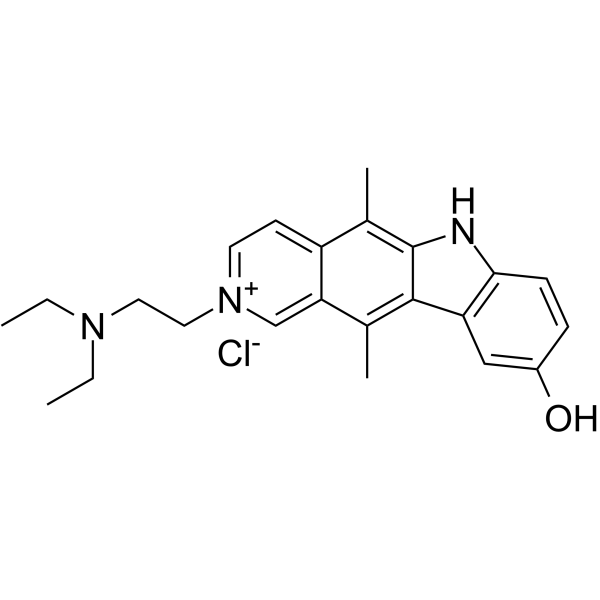 0 ImagesDatelliptium chloride is a DNA-intercalating agent derived from ellipticine, with anti-tumor activities.
-
N6-Methyladenine (Standard)
 0 ImagesN6-Methyladenine (Standard) is the analytical standard of N6-Methyladenine (HY-116887). This product is intended for research and analytical applications. N6-Methyladenine is a modified purine that is widely present in prokaryotes. In prokaryotes, N6-Methyladenine plays an important role in distinguishing host DNA from exogenous DNA and controls many biological functions, such as DNA replication, transcription, mismatch repair, and chromosome replication. N6-Methyladenine can be used for the kidney diseases.
-
5-Me-DMT-2'-O-Me-C(Bz)-CE-Phosphoramidite
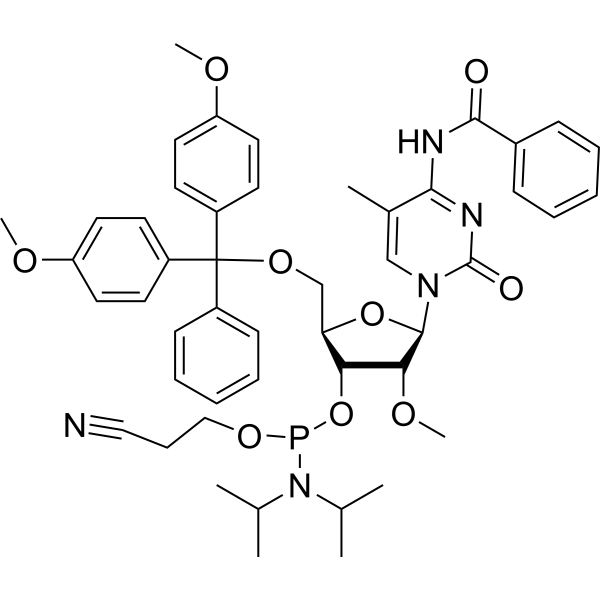 0 Images5-Me-DMT-2'-O-Me-C(Bz)-CE-Phosphoramidite is a phosphorite monomer that can be used in the synthesis of oligonucleotides.
-
DNA polymerase-IN-6 formic
 0 ImagesCat. No.: HY-170547ADNA polymerase-IN-6 formic is an antiviral agent and a DNA polymerase inhibitor. DNA polymerase-IN-6 formic inhibits the replication of HCMV, HSV-1, HSV-2 and EBV. DNA polymerase-IN-6 formic exhibits low cytotoxicity in mammalian cells. DNA polymerase-IN-6 formic can be used in research related to viral infections.
-
Remdesivir-d5
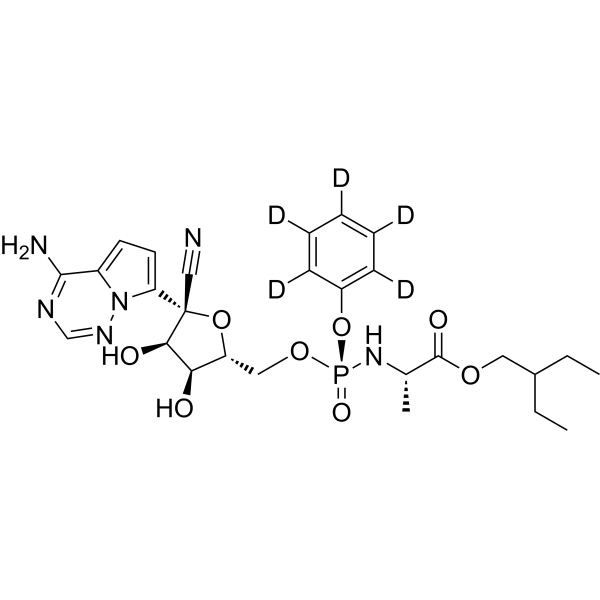 0 ImagesCat. No.: HY-104077SPurity: 99.86%Synonyms: GS-5734-d5Remdesivir-d5 (GS-5734-d5) is a deuterium labeled Remdesivir (HY-104077). Remdesivir (GS-5734) is a nucleoside analogue with effective antiviral activity. Remdesivir can inhibit the synthesis of viral DNA or RNA. Remdesivir can be used for the research of infection, such as SARS-CoV and MHV infection.

-
Synucleozid
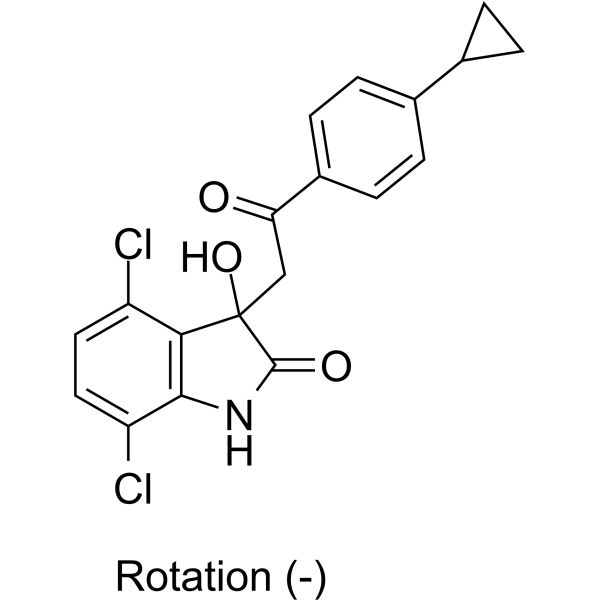
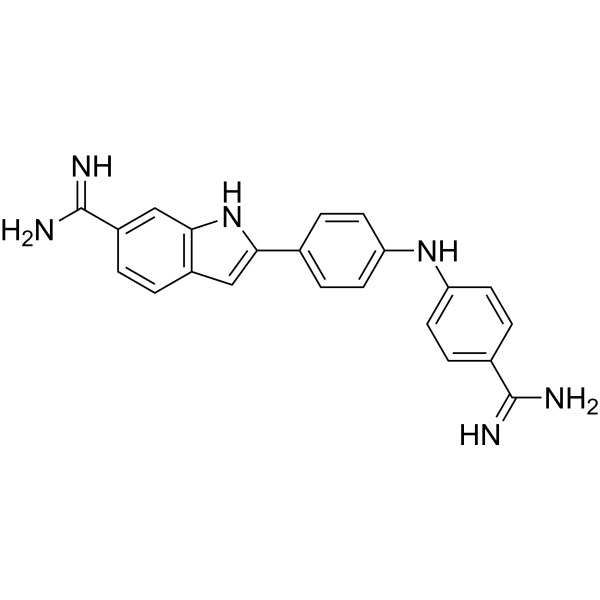 0 ImagesCat. No.: HY-135902CAS No.: 502139-01-7Synonyms: NSC 377363Synucleozid (NSC 377363) is a potent inhibitor of the SNCA mRNA that encodes α-synuclein protein. Synucleozid selectively targets the α-synuclein mRNA 5′ UTR at the designed IRE site, decreases the amount of SNCA mRNA loaded into polysomes and thereby inhibits SNCA translation. Synucleozid has the potential for the investigation of Parkinson’s disease.
-
Maleic hydrazide-d2
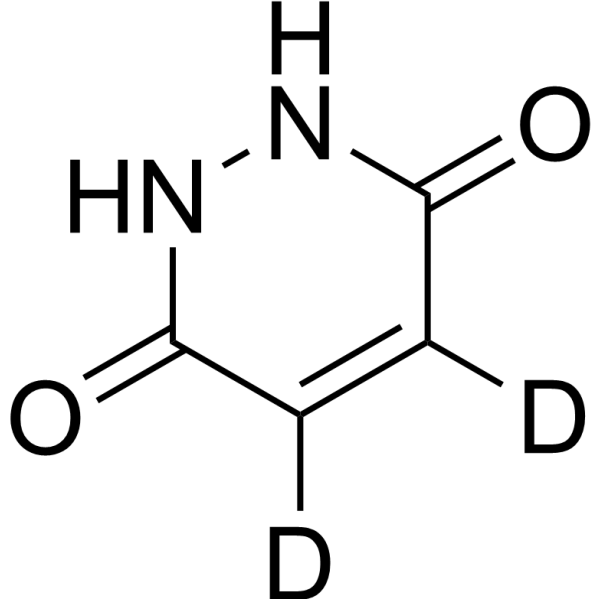 0 ImagesCat. No.: HY-59354SCAS No.: 2398483-97-9Maleic hydrazide-d2 is the deuterium labeled Maleic hydrazide. Maleic hydrazide is extensively used as a systemic plant growth regulator and as a herbicide. Maleic hydrazide acts as an inhibitor of the synthesis of nucleic acids and proteins.
-
GS-443902
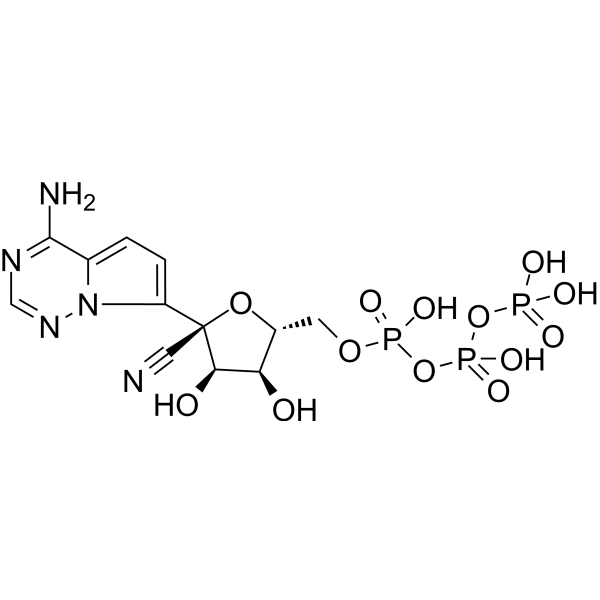 0 ImagesCat. No.: HY-126303CAS No.: 1355149-45-9Synonyms: GS-441524 triphosphate; Remdesivir metabolite

-
MOMA-341
 0 ImagesCat. No.: HY-175750CAS No.: 3078276-74-8MOMA-341 is a selective Werner RecQ like helicase (WRN) inhibitor. MOMA-341 binds to WRN at cysteine 727 through an allosteric and ATP-competitive binding mechanism. MOMA-341 has antitumor activity and can be used for advanced and metastatic solid tumors research.
-
Pritelivir mesylate hydrate
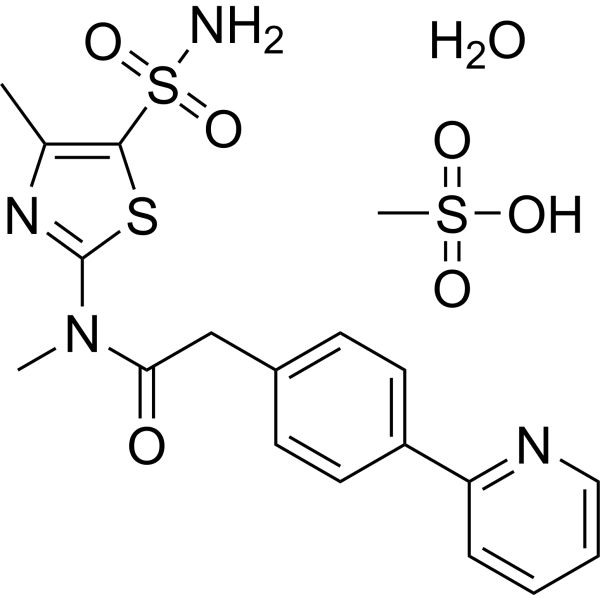 0 ImagesSynonyms: AIC316 mesylate hydrate; BAY 57-1293 mesylate hydratePritelivir mesylate hydrate (BAY 57-1293 mesylate hydrate), an inhibitor of the viral helicase-primase complex, exhibits antiviral activity in vitro and in animal models of herpes simplex virus (HSV) infection. Pritelivir mesylate hydrate is active against herpes simplex virus types 1 and 2 (HSV-1 and HSV-2) with the IC50 of 0.02 μM against HSV1-2.
-
5'-Deoxy-5-fluorocytidine (Standard)
 0 ImagesSynonyms: 5-Fluoro-5'-deoxycytidine (Standard)5'-Deoxy-5-fluorocytidine (Standard) is the analytical standard of 5'-Deoxy-5-fluorocytidine (HY-W009538). This product is intended for research and analytical applications. 5'-Deoxy-5-fluorocytidine (5-Fluoro-5'-deoxycytidine) is a cytidine analog and metabolite of Capecitabine (HY-B0016). 5'-Deoxy-5-fluorocytidine is converted from Capecitabine by carboxylesterase in the liver. 5'-Deoxy-5-fluorocytidine is deaminated by cytidine deaminase to generate 5'-deoxy-5-fluorouridine, which is finally converted into 5-fluorouracil (HY-90006) by thymidine phosphorylase in tumor tissues to exert anti-tumor effects. 5'-Deoxy-5-fluorocytidine is used in the researches for solid tumors such as colorectal cancer, non-small cell lung cancer and breast cancer.
-
Deoxythymidine-5'-triphosphate-d15 dilithium
 0 ImagesCat. No.: HY-138615S5CAS No.: 2687960-74-1Synonyms: dTTP-d15 dilithiumDeoxythymidine-5'-triphosphate-d15 (dTTP-d15) dilithium is the deuterium labeled Deoxythymidine-5'-triphosphate (HY-138615). Deoxythymidine-5'-triphosphate (dTTP) is one of the four nucleoside triphosphates. Deoxythymidine-5'-triphosphate (dTTP) is used in the synthesis of DNA.
-
Ultevursen
 0 ImagesCat. No.: HY-147412CAS No.: 2642382-41-8Synonyms: QR-421aUltevursen (QR-421a) is a splice-modulating antisense oligonucleotide targeting exon 13 of the USH2A gene, which restores the functional expression of Usherin protein by inducing exon skipping. Ultevursen binds to USH2A pre-mRNA and modulates the splicing process to specifically skip exon 13 carrying the pathogenic mutation c.2299delG, generating an in-frame transcript and a truncated yet functionally normal protein. Ultevursen exhibits concentration-dependent exon skipping activity in human cells and retinal organoid models, and restores Usherin expression and retinal function in zebrafish and gene-edited mouse models. Ultevursen can be used for related research on type 2 Usher syndrome and non-syndromic retinitis pigmentosa.
-
2-5A pentasodium solution (100 mM)
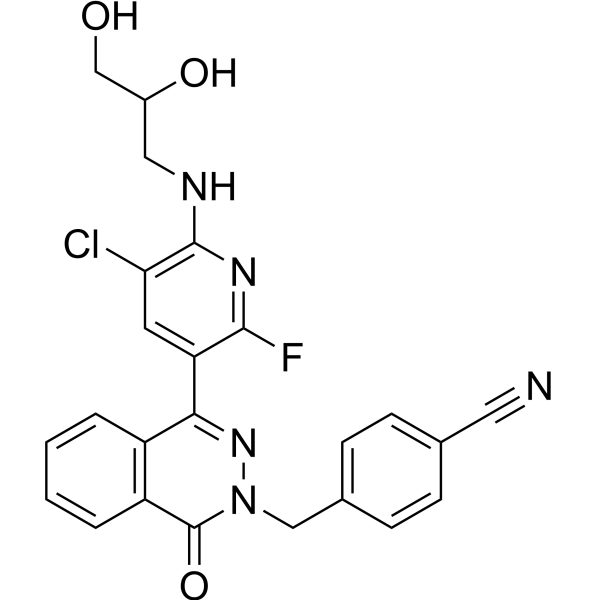
 0 ImagesCat. No.: HY-173189ASynonyms: 2′,5′-ApApA pentasodium; 2′,5′-trioligoadenylate pentasodium; 5'-O-Triphosphoryladenylyl-(2'→5')-adenylyl-(2'→5')-adenosine pentasodium2-5A (2′,5′-ApApA) pentasodium solution 100 mM is a high-affinity (Ka=0.04 nM) RNase L binder. 2-5A pentasodium solution 100 mM activates the nuclease activity of latent RNase L to cleave single-stranded RNA by inducing conformational changes and dimerization of latent RNase L, thereby mediating critical antiviral responses and enhancing interferon effects. 2-5A pentasodium solution 100 mM not only effectively inhibits Rauscher murine leukemia virus replication, reduces viremia and splenomegaly, but also enhances antileukemic efficacy when combined with amphotericin B and exhibits favorable high-dose tolerance. 2-5A pentasodium solution 100 mM is an important tool molecule for investigating the pathological mechanisms of viral infection, hereditary prostate cancer and leukemia.
-
Setrobuvir
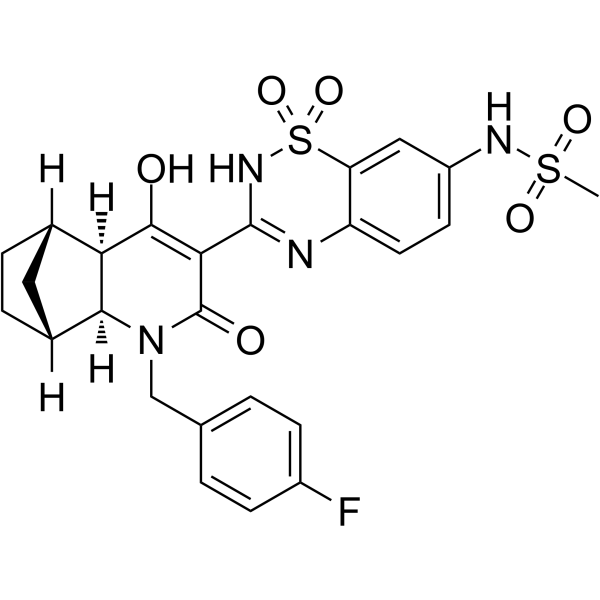 0 ImagesSynonyms: ANA598Setrobuvir (ANA598) is an orally active non-nucleosidic HCV NS5B polymerase inhibitor. ANA-598 inhibits both de novo RNA synthesis and primer extension, with IC50s between 4 and 5 nM. Setrobuvir also shows excellent binding affinity to SARS-CoV-2 RdRp and induces RdRp inhibition.




